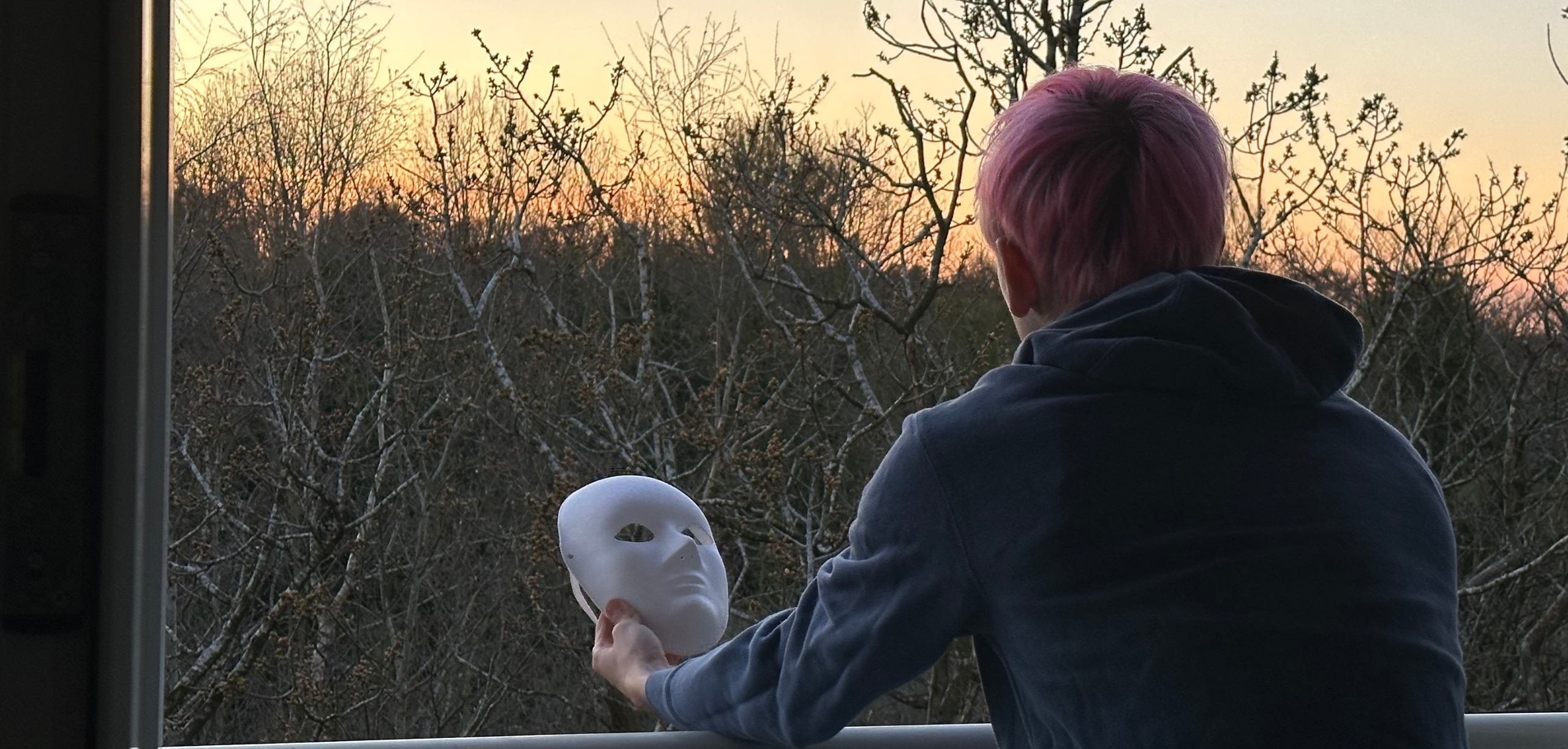
Unmasking: Embracing Autism And Letting Go Of The Facade
“I wouldn’t know you were autistic if you didn’t tell me”
A phrase that lingers as I navigate the world.
When these words are spoken, they’re meant as a compliment, but the implication is more sinister. It becomes clear that…
The mask must stay on. Always.
I can’t slip up. I must maintain eye contact, but not too much. Oh no, not too much. What are you doing? You’re staring, look away. Was that a social cue? They’re asking you a question. You missed it, make something up. Revert back to your bank of phrases. Make a joke, people like jokes, right? Can you relate? Say something, dammit. Now you’re saying too much, let someone else speak.
Keeping the illusion intact
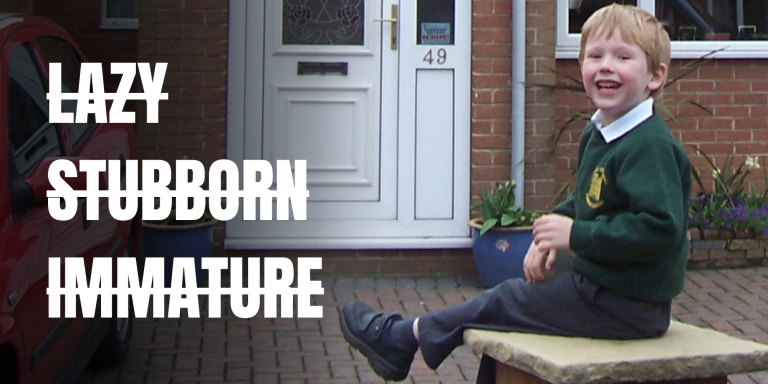
They say “you don’t seem autistic” but what they mean is “you’ve made yourself palatable.” I’ve learned the hard way what happens when I don’t. The looks, the comments behind your back, the loss of friendships, the loneliness.
But here’s the thing about masking, it’s not just about fitting in. It’s about survival. It’s a shield that we carry around to cover up our perceived imperfections. Those parts of us we don’t want anyone to see because when the wrong person makes the wrong perception, we are outcasted. For we’ve forgotten that society’s rules were created without everyone being consulted, and the rule book is closed to amendments.
Hiding from the truth that I had to unmask
I hid behind my mask for years. After graduating university, I went for a job interview where I was asked about my hobbies and interests. I couldn’t name a single thing. My education had trained me to be the definition of professional, but in the process, I had lost myself.
I wasn’t just wearing the mask anymore. At some point, I had become it.
Masking doesn’t just happen in social settings, it follows you into the workplace too. In one role, I confided in a senior colleague that I was actively trying to appear more neurotypical, hoping for reassurance. Their response? “Good.” That moment stuck with me. It reinforced the idea that my natural way of being wasn’t enough. That success meant continuing to perform.
When I also inquired about reasonable adjustments, I was told it “wouldn’t be fair on the rest of the team.” It was a stark reminder that inclusion often hinges on whether it’s convenient for others, rather than what’s necessary for those who need it.
The cost of hiding
Despite this realisation, I kept the mask on. It was familiar. It was comfortable. More than that, I was terrified of what would happen if I took it off.
Losing my job was a real fear. I worried about undoing everything I had worked so hard to achieve. Two degrees, countless hours spent on personal development courses, the sacrifices I made, trading my social life for employability at university – it all felt like it could disappear in an instant. With only 30% of autistic people working, I feared becoming part of a statistic no one seems to care about. Financial insecurity loomed, and I felt trapped. What choice did I have but to keep performing?
But masking comes at a cost. The exhaustion, the disconnect, the quiet grief of never feeling truly seen. Eventually, something had to change. So, I started the long process of unmasking.
Why unmasking matters
Slowly, I’ve been teaching myself to unmask. It’s been one of the hardest but also most liberating things I’ve ever done. Am I there yet? No. Am I close? Not even. But I’m getting there, and I’m pleased to say that I now have hobbies.
I’ve rediscovered the things that bring me joy – reading, gaming, creative projects. The things I never gave myself time for because they weren’t ‘productive’ enough. They remind me that I am more than my work. That I have a life outside of my ability to perform.
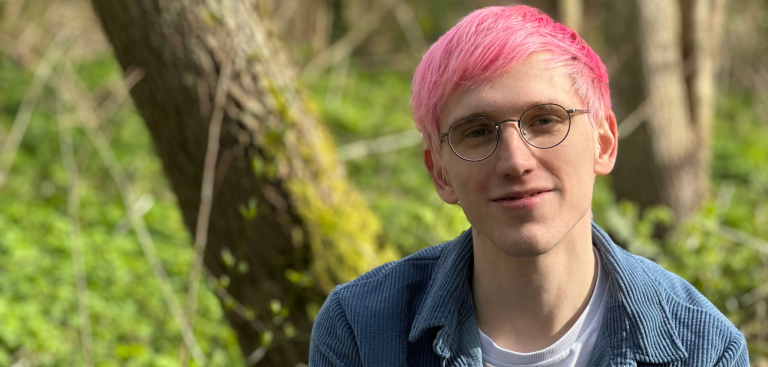
The most important lesson I’ve learned is that unmasking isn’t about suddenly not caring how I’m perceived, but becoming comfortable enough to find myself again. To find Sam.
I recently spoke to an ex-colleague and friend who said to me:
When you’re dead, they won’t write on your grave that you worked really hard. People won’t tell stories about your work. They’ll speak about how funny you were, how much of a people person you were. People will talk about Sam.
I didn’t tell her how much those words resonated with me, or how important it was that I heard them. In that moment, I realised that when my time comes, I want people to remember me for who I was, not who I was supposed to be. Whoever that person is, I’m excited to meet them.
But stepping into my truth doesn’t erase the years of exhaustion that masking has left behind.
Why masking is exhausting
There’s a concept called Spoon Theory, often used to describe the energy levels of disabled and neurodivergent people. Imagine that every action you take throughout the day: getting dressed, holding a conversation, making a decision etc requires a spoon. Most neurotypical people have an unlimited supply, while neurodivergent people only start with a limited number. Every social interaction, every moment spent masking, drains those spoons faster than you’d think.
For most people, maintaining eye contact is automatic. For me, it’s a conscious effort – one of many I have to juggle in every interaction. It’s like the game ‘Hi, My Name Is Joe’, where you’re patting your head, stomping your feet, clicking your fingers, and doing it all at once. Except instead of a game, it’s every conversation, every day. I have to monitor my eye contact, regulate my tone of voice, look engaged, anticipate any unintended subtext in what I just said, suppress stimming movements, and then, only then, figure out what I actually want to say.
And it doesn’t stop there. Meetings demand an extra layer of effort. Reading between the lines, decoding office politics, making sure I don’t speak too soon or too late are frequent considerations. Even casual conversations require constant calculations: Am I laughing at the right time? Am I reacting appropriately? Did I misinterpret that joke?
By the end of the day, I don’t just feel tired – I feel spent. That’s why, as soon as I get home, I collapse onto the sofa, drained of every last spoon. Masking isn’t just about fitting in. It’s a full-time job in itself.
Unmasking isn’t easy
When it comes to unmasking, I still slip into old habits, though it’s getting easier. But if there’s one thing I know, it’s that I lead with principle.
For too long, I’ve let fear dictate who I am. I’ve stayed silent, made myself smaller, and hidden behind a version of myself built to please others. But I refuse to live like that anymore. It’s time I stand up for myself. It’s time I speak my truth.
I don’t expect to unlearn years of masking overnight. It will be uncomfortable. It will take time. But for the first time, I am showing up as me – fully, unapologetically, and authentically.
And I’m not turning back.